
You may have heard the word matrescence used to describe the transition into motherhood.
For some women, simply discovering there is a name for what they are experiencing brings enormous relief, because becoming a mother can change far more than your daily routine. It can change the way you see yourself. Your relationships may feel different. Your priorities can shift. You might question a career you once felt certain about, become more aware of what you need, or find yourself responding to situations in ways you don’t quite recognise.
Sometimes these changes are welcome. Others can be confusing, uncomfortable or difficult to explain.
This is part of what we mean when we talk about matrescence.
What is matrescence?
Matrescence is the transition a woman experiences through motherhood.
The term was introduced by anthropologist Dana Raphael in the 1970s. More recently, researchers and clinicians, including Dr Aurelie Athan and psychiatrist Dr Alexandra Sacks, and matrescence activist Amy Taylor-Kabbaz, have helped bring greater attention to the concept.
Matrescence encompasses the physical, psychological, emotional, social, economic, cultural and spiritual changes associated with becoming a mother. It can affect your identity, relationships, work, values, priorities and the way you understand yourself.
And it begins before the baby arrives.
Pregnancy and the anticipation of motherhood can already begin changing how you think about yourself and your future. Birth and early motherhood bring further changes, but matrescence isn’t confined to pregnancy, birth or the first year of a child’s life.
It is an ongoing significant developmental transition that we experience differently in different stages of our motherhood journey.
Why is matrescence compared with adolescence?
Dr Aurelie Athan likened matrescence to adolescence because both are periods of significant human development.
We expect adolescence to involve change. Bodies change. Brains develop. Relationships evolve. Emotions can feel different or more intense. Teenagers begin asking questions about who they are, where they belong and who they want to become.
We don’t expect an adolescent to emerge from that transition exactly as they entered it.
Yet we don’t always give mothers the same understanding.
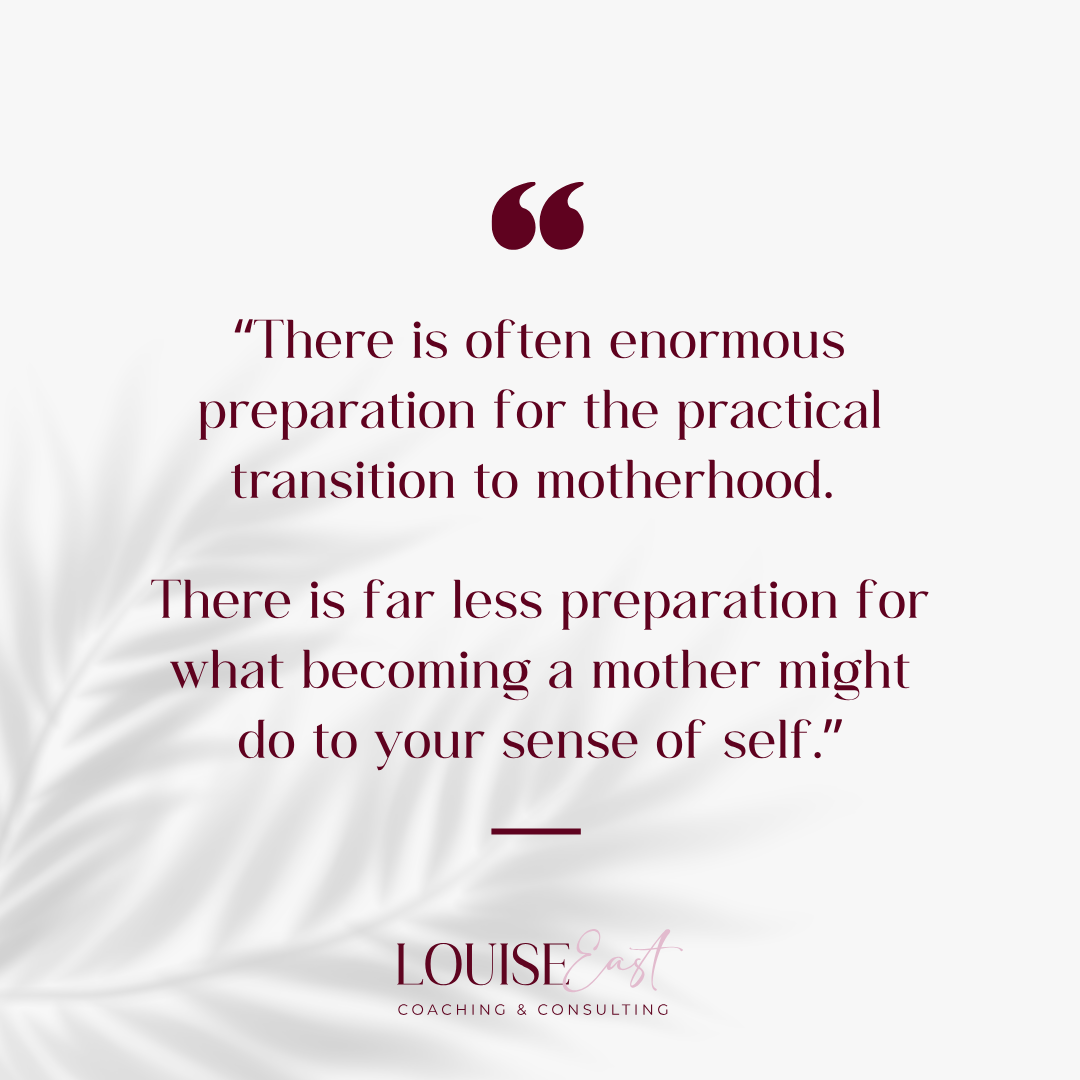
There is often enormous preparation for the practical transition to motherhood: what the baby will need, how birth might unfold, how feeding works, what happens to your body and how to care for a newborn.
There is far less preparation for what becoming a mother might do to your sense of self and to the other parts of your life.
You can know motherhood will change your life without realising how deep and far-reaching these changes might be.
What actually changes during matrescence?
There isn’t one universal experience of matrescence. Your experience will be influenced by your personality and history, your relationships, your culture, your work, your financial circumstances, the support available to you and many other parts of your life.
But there are some common areas in which women experience change.
Your body and brain
Pregnancy, birth and motherhood involve substantial biological change. Hormones change throughout pregnancy and after birth. The maternal brain also undergoes significant neurological adaptations associated with caring for and responding to a baby. Then there is the physical reality of motherhood itself: disrupted sleep, feeding, recovery from pregnancy and birth, and the ongoing physical demands of caring for children. These experiences can affect how you feel in your body and how you understand yourself.
Your identity
Motherhood adds a significant new identity to your life. For some women, becoming a mother feels deeply natural. For others, integrating motherhood with the person they already know themselves to be takes time. Many experience both.
You may find yourself thinking about who you were before children and wondering how much of that woman still fits. You are also forming ideas about the kind of mother you want to be, often while absorbing powerful messages about the kind of mother you should be. That can create tension between who you were, what is expected of you and who you are becoming.
Your relationships
Motherhood can change relationships in ways you didn’t anticipate.
Your relationship with your partner may change as you negotiate care, paid work, household responsibilities, intimacy and competing needs.
Friendships can shift. Your relationship with your own parents may look different once you become a parent yourself. You may also become more aware of how much emotional and practical support you have around you, or how much you don’t.
Even familiar relationships can require renegotiation because you are no longer entering them as quite the same person.
Your career and ambition
For working mothers, matrescence doesn’t stop when you walk through the office door. Some women return to work feeling deeply connected to their careers. Others find that motherhood has changed what they want from work, what they are prepared to give to it or what success means to them.
You might still be ambitious while wanting to pursue that ambition differently. You may also be trying to reconcile the practical realities of caregiving with workplace expectations that were much easier to meet before children.
This can be particularly disorienting for women who have always been highly capable and confident in their professional lives. A career path that once seemed obvious may suddenly raise questions you never expected to be asking. That doesn’t necessarily mean you’ve lost your ambition. It may mean you are reconsidering what you want your ambition to serve.
Your values and priorities
Motherhood can make you see your life through a different lens. Things you previously tolerated may become harder to ignore. Goals that once motivated you can lose some of their importance. Other needs or desires may become more visible.
This can be unsettling, particularly if you’ve built a life around a clear idea of who you are and what you want. It can also explain why decisions that once seemed straightforward suddenly require much more thought. You are making them from a different place.
Matrescence can involve conflicting feelings
One of the ideas I find particularly helpful in understanding matrescence is maternal ambivalence.
Psychotherapist Rozsika Parker wrote extensively about the contradictory feelings that can coexist within motherhood, and Alexandra Sacks has also brought this experience into contemporary conversations about matrescence.
- You can love being with your children and desperately want time away from them.
- You can value your career and resent what it asks of you.
- You can feel grateful for your life while missing parts of the life you had before children.
- You might want greater independence and then feel guilty when you take it.
These feelings can be uncomfortable because we are often given a much simpler picture of how mothers are supposed to feel.
Real motherhood is more psychologically complex.
Conflicting feelings don’t necessarily tell you that you’ve made the wrong choices or that you aren’t grateful enough. Sometimes they simply reflect the reality of caring deeply about different parts of your life at the same time.
Matrescence isn’t something that happens only inside you
Matrescence isn’t something that happens only inside a woman.
Motherhood takes place within families, workplaces, communities and cultures. Your experience of becoming and being a mother is shaped by the world you’re doing it in. Cultural ideas about what a “good mother” should be, the way care is shared within families, workplace expectations, financial circumstances, access to childcare and support all form part of the context in which your matrescence unfolds.
This matters because it’s easy to interpret the challenges of motherhood as evidence that something is wrong with us individually. But some of the friction women experience comes from trying to navigate competing expectations, unequal demands or systems that haven’t been designed around the realities of caregiving.
Understanding matrescence therefore involves looking at both what is changing within you and what is happening around you.
How long does matrescence last?
There isn’t a neat point at which matrescence ends.
It is often discussed in relation to pregnancy and early motherhood because this is when many of the changes are most visible and intense.
But motherhood continues to change, and it continues to change us.
You may experience another period of adjustment when you have another child, return to work, change careers, separate from a partner, watch your children begin school or move into adolescence. A new stage in your child’s development can ask something different of you too.
I speak to mothers years into motherhood who suddenly realise the life that used to fit doesn’t fit in quite the same way anymore. They may have spent years getting on with what needed to be done before finding themselves asking questions about their work, relationships, identity or what they want the next part of their life to look like.
Matrescence can give us useful context for those questions.
Why don’t I feel like myself after becoming a mother?
This is one of the most common experiences I hear from mothers.
Sometimes women describe it as having “lost themselves”. Others can’t identify exactly what has changed but they know they don’t quite recognise themselves anymore.
It makes sense that we want to get back to ourselves when this happens.
But which self?
The woman you were before motherhood still matters. There may be interests, ambitions, relationships and parts of your personality that have been pushed aside and that you genuinely want to reconnect with.
At the same time, motherhood may have changed you.
You might care about different things now. You may have discovered strengths you didn’t know you had. Your limits may be clearer. Your definition of a good life may be changing.
The question isn’t necessarily how to become your old self again.
More useful questions can be: Who am I now? and Who am I becoming?
Not only as a mother, but as a whole person whose experiences have changed her.
Why understanding matrescence matters
Learning about matrescence can give you language for experiences that previously felt confusing or deeply personal.
If you’ve been questioning why you’re more emotional, why your career feels different, why you can’t make a decision that once would have seemed obvious, or why you no longer seem satisfied by the things you thought you wanted, there’s more going on than a failure to cope.
You are navigating significant internal change while also responding to very real external demands.
Understanding that context can help you become more curious about your experience.
- What has changed for me?
- What matters to me now?
- Which expectations am I trying to live up to?
- What do I need in this stage of my life?
- Which parts of myself do I want to reconnect with, and what new parts of myself am I still getting to know?
There isn’t one way to navigate your matrescence. Motherhood doesn’t need to lead every woman towards the same priorities, career choices or way of living.
The value of understanding matrescence is that it gives you another way to make sense of what you’re experiencing, and that allows you to ask different questions, understand yourself differently, and make different choices.
Explore your own experience of matrescence
Knowing what matrescence means can explain a lot. Exploring what it has actually meant for you is more personal.
I’ve created a free matrescence guide to help you look at the changes you may be experiencing across motherhood, identity, relationships, work and your inner world.
It will help you put language around what’s changing and begin understanding yourself in the context of who you are now.



0 Comments